

Knowledge Center

Categories

Picture of Vance Zhang

Vance Zhang

M.Sc.,Politecnico di Milano

API 600 vs API 602 vs API 603 gate valve standards comparison guide for industrial procurement

API 600 vs API 602 vs API 603: The Complete Guide to Gate Valve Standards for Industrial Procurement

When sourcing industrial gate valves, three API standards define the global benchmark: API 600, API 602, and API 603. Each serves a distinct purpose — from large-bore high-pressure refinery pipelines to compact small-bore instrument lines and corrosion-resistant stainless steel applications. This guide breaks down the scope, design requirements, and key differences of all three standards, with a practical comparison table and actionable procurement guidance to help engineers and buyers select the right valve for every service condition.
Read More »

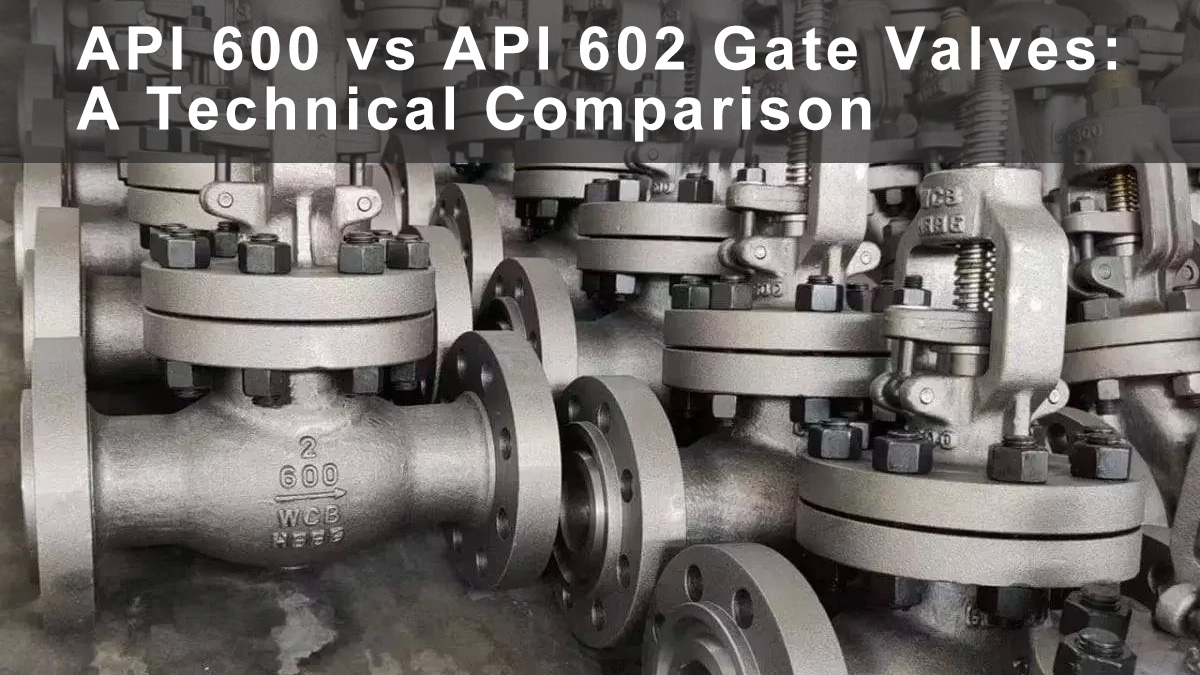
API 600 and API 602 Gate Valves Explained: Design Differences, Applications, and Selection Criteria

Choosing between API 600 and API 602 gate valves is a critical decision in industrial piping design. While both standards are widely used for isolation service in oil and gas, petrochemical, power generation, and chemical processing applications, they are intended for different operating conditions and piping configurations. API 600 gate valves are typically cast steel valves designed for medium- and large-diameter pipelines, offering robust construction, high flow capacity, and excellent maintainability. API 602 gate valves, on the other hand, are forged steel valves primarily used in small-bore, high-pressure piping systems where compact design, mechanical strength, and pressure integrity are essential. This technical guide compares API 600 and API 602 gate valves in terms of construction, size range, pressure ratings, bonnet designs, applications, and selection criteria, helping engineers and procurement professionals choose the most suitable valve standard for their projects.

Read More »
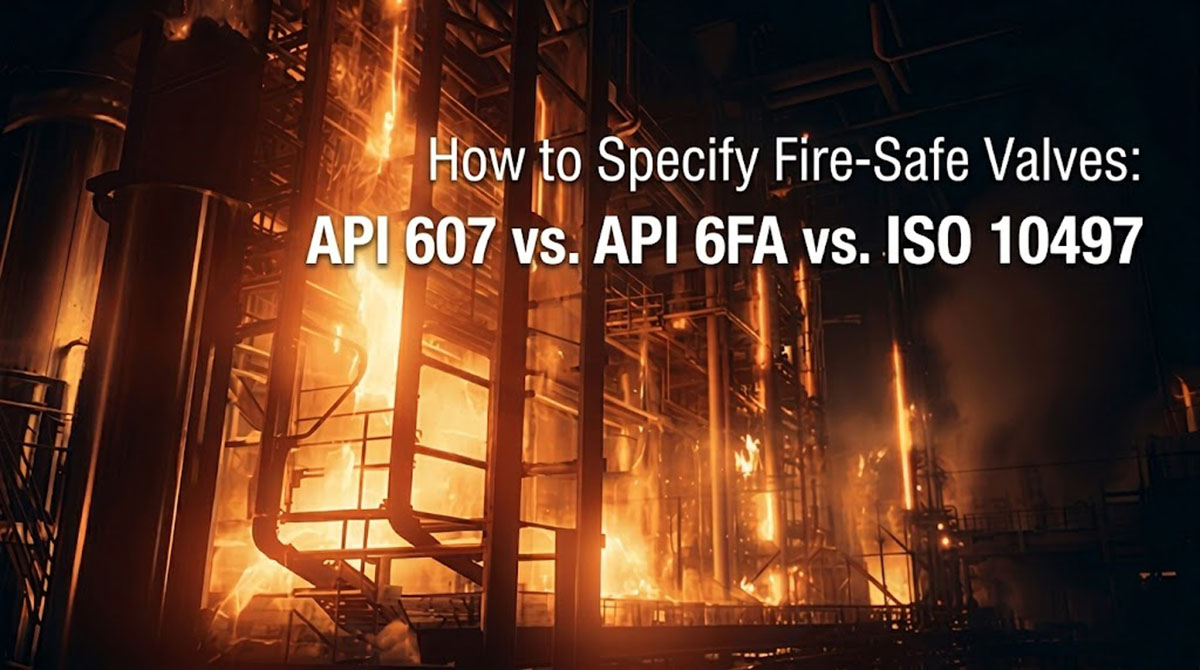
Industrial pipeline system under extreme fire testing conditions complying with API 607, API 6FA, and ISO 10497 standards

How to Specify Fire-Safe Valves: API 607 vs. API 6FA vs. ISO 10497

Evaluating valve fire-test standards is critical for safety compliance in high-risk oil, gas, and petrochemical projects. This technical article clarifies the core distinctions between API 607, API 6FA, and ISO 10497. By breaking down their targeted seat materials (soft vs. metal), testing methodologies, and post-burn operational sequences, this guide provides a straightforward framework to help project engineers and procurement teams specify the correct fire-safe certification for their piping systems without over-specifying.

Read More »

Seeking Expert Guidance for Demanding Fluid Solutions?

* The data you provide will be used solely for processing your business inquiries and deliver-ing professionaltechnical support. We hereby commit that your information will never besold or disclosed to any third party, andthat it will be strictly protected in accordance withapplicable privacy standards. You may contact us at any time
to update or request the dele-tion of your personal information.

Scroll to Top

Get Your Free Technical Guide & Price List

* The data you provide will be used solely for processing your business inquiries and deliver-ing professionaltechnical support. We hereby commit that your information will never besold or disclosed to any third party, andthat it will be strictly protected in accordance withapplicable privacy standards. You may contact us at any time
to update or request the dele-tion of your personal information.